Discipline · Sheet C-102
Site servicing and land development
Before a lot can be sold or built on, it needs water, sanitary and storm connections, roads and shallow utility corridors, and the agreements and levies that pay for the infrastructure already serving the area. This is how that process runs.
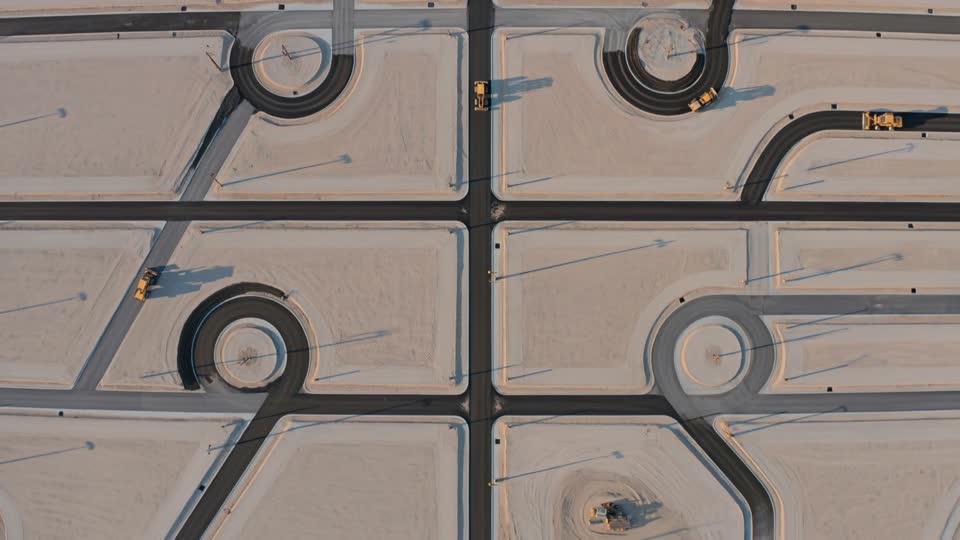
Site servicing is the work that turns a parcel of raw or under-used land into lots that a building permit can be issued for: water, sanitary sewer, storm drainage, roads and the shallow trenches for power, gas and telecom. It sits upstream of almost every other discipline on this site, because nothing else can start until the pipes and roads are in and inspected. It also comes with more paperwork than any other civil trade, because a municipality is being asked to accept new infrastructure into its system forever.
STA 0+120What site servicing covers
A servicing job for a new subdivision, infill site or commercial pad typically bundles several disciplines under one contract or one staged program:
- Water distribution. Watermain, valves, hydrants and services to the property line, tied into an existing main at one or more points.
- Sanitary sewer. Gravity main, manholes and services, sized and graded to carry wastewater to an existing trunk or lift station.
- Storm drainage. Pipe, catch basins, and increasingly a pond or underground tank to control the rate of runoff leaving the site.
- Roads. Subgrade, base, asphalt or concrete, curb and gutter, sidewalks and street lighting conduit.
- Shallow utilities. A joint trench or separate crossings for power, gas, telecom and cable, usually built by or coordinated with the utility companies rather than the civil contractor.
Each of these is its own discipline with its own detail: see underground utilities for pipe, bedding and manhole design, and roadbuilding and paving for the road structure itself. This page covers the parts that are specific to servicing: the approvals, the levies and the order the work happens in.
STA 0+240Approvals and the servicing agreement
Before a shovel goes in the ground, the land typically needs a land-use redesignation or rezoning, a subdivision or development approval, and a servicing (or development) agreement with the municipality. The agreement sets out what the developer builds, to what standard, and what security (usually a letter of credit) the municipality holds until the work is accepted.
Every city publishes its own design guidelines and standard specifications, and they are not interchangeable. Calgary's Design Guidelines for Subdivision Servicing are the 2020 edition1, its Standard Specifications for Road Construction are the 2021 edition2, and Edmonton republished its Complete Streets Design and Construction Standards in 20253. A design done to one city's standard rarely transfers cleanly to another, which is a common source of rework when a firm expands into a new market.
The engineering drawings for this stage are usually called a Development Site Servicing Plan (or equivalent) and are stamped by a professional engineer. See civil engineering vs civil construction for who does the design and who builds it, and the site servicing process for the approval sequence end to end.
STA 0+360Off-site levies and development charges
Off-site levies (also called development charges or a servicing agreement fee, depending on the province) recover the cost of the trunk infrastructure, arterial roads and community facilities that a new area draws on, even when the developer builds all the on-site pipe and pavement itself. Three examples from 2026 municipal schedules show how differently they are structured:
- Calgary charges eleven separate greenfield off-site levy lines (transportation, water distribution, wastewater and water treatment, stormwater, recreation, police, library, transit and emergency response). Summed, the 2026 rates work out to roughly $664,597 per hectare, with the transportation levy alone at $170,336 per hectare4.
- Edmonton charges an Arterial Roadway Assessment (ARA) instead of a single levy schedule; the 2026 city-wide weighted-average core rate is about $299,963 per hectare for residential land and $120,595 per hectare for industrial land, on top of a separate signal rate and, in some quadrants, a land dedication rate5.
- Regina sets a single greenfield development charge of about $385,585 per hectare for residential and commercial land and $128,494 per hectare for industrial-zoned land, effective January 1, 2026, plus area-specific charges in some growth areas6.
Not a quote
Levy schedules change every year, differ by land use and growth area, and sit on top of the construction cost of the on-site work. Confirm the current rate with the municipality's planning department before pricing a parcel. The lot and subdivision servicing cost guide separates levies from construction cost in more detail.
STA 0+480Why municipalities charge for growth
Local and regional governments own 72% of Canada's transportation and water infrastructure by replacement value7, and most of it is aging: Statistics Canada put the replacement value of road infrastructure at $1.63 trillion and water infrastructure at $963 billion as of the end of 202277. Levies are one way a city funds the trunk capacity new growth needs without raising general taxes; senior-government transfers are the other.
The federal government's Canada Housing Infrastructure Fund commits $6 billion over 10 years to water, wastewater, stormwater and solid-waste infrastructure that enables new housing, split into a $1 billion Direct Delivery stream (now closed to new applicants) and a $5 billion Provincial and Territorial Agreement stream888. The newer Build Communities Strong Fund, announced in Budget 2025, adds $51 billion over 10 years starting 2026-27 for local roads, water systems, housing and community infrastructure, including a Community stream that continues the former federal Gas Tax Fund at more than $2.5 billion a year910.
None of this money flows to a developer directly. It reduces how much a municipality needs to recover through levies and property tax over time, and it is worth knowing about when a servicing agreement references a city capital project the new lots will tie into.
STA 0+600How a servicing job runs
- Land-use and subdivision approval. Rezoning if needed, then a subdivision or development permit application.
- Servicing agreement. Scope, standards, security and levies are set with the municipality.
- Detailed design. A consulting engineer produces the servicing drawings and gets them approved.
- Tender or negotiated award. The developer's civil contractor is selected; see bidding on public tenders for how public work is run, and bid, performance and payment bonds for the security involved.
- Earthworks and rough grading. The site is cleared, stripped and graded to a rough subgrade before pipe goes in.
- Underground construction. Watermain, sanitary and storm are installed deepest first, then shallow utilities in a joint trench.
- Road construction. Subgrade preparation, base course, curb and gutter, then asphalt or concrete surfacing.
- Testing and acceptance. Pressure and leakage testing on water, camera inspection on gravity sewers, compaction testing on fill and base, then a deficiency walk before the municipality accepts the work.
- Warranty and holdback release. A maintenance bond typically runs one to two years before final acceptance and release of the last holdback; see construction holdbacks.
Frost and road bans shape the calendar as much as approvals do: underground work in the Prairies and northern Ontario usually targets summer and early fall so trenches are not fighting frozen ground, and paving is timed to avoid a spring road ban on the haul routes in.
STA 0+720What early servicing work costs
Alberta Transportation and Economic Corridors publishes the average of the three lowest bids on every item it tenders on the provincial highway system. These are highway-scale prices, not a municipal subdivision tender, but they are a useful scale reference for the line items a servicing job includes:
| Item | Unit | 2026 avg | Contracts | 2025 | 2024 |
|---|---|---|---|---|---|
| ClearingItem G100 | ha | $18,278 | 2 | — | — |
| Subgrade ExcavationItem B100 | m³ | $28.34 | 15 | — | — |
| Concrete Storm Sewer - Supply and InstallItem D787 | m | $494.69 | 1 | — | — |
| Curb and GutterItem X325 | m | $183.00 | 5 | $238.70 | $156.15 |
Curb and gutter is a good example of regional spread inside one province:
| Region | Avg per m | Contracts |
|---|---|---|
| Southern region | $180.00 | 1 |
| Central region | $208.58 | 3 |
| Peace region | $169.53 | 1 |
| Province | $183.00 | 5 |
A municipal subdivision tender will price these differently again, because it carries urban traffic control, smaller and more constrained work areas, and municipal inspection and testing requirements that a rural highway job does not. The lot and subdivision servicing cost guide and the unit price index carry the full item list.
STA 0+840What to send for a price
A servicing job is priced from the approved (or draft) engineering drawings, not a sketch, because pipe sizes, grades and road cross-sections are fixed by the design. A complete brief usually includes:
- The approved or draft servicing drawings, or at minimum the parcel size, lot count and land use mix.
- A geotechnical report covering the subgrade, groundwater and any contamination concerns.
- The point of connection for water, sanitary and storm, and any offsite works the agreement requires.
- Whether levies have been assessed and paid, and what the servicing agreement already commits to.
- The staging plan, if the lots will be released in phases.
- The schedule, including any deadline tied to a builder's lot-take date or a freeze-up window.
Ask how holdback and warranty terms are structured, who carries the risk of an existing utility conflict found during construction, and whether the municipality's inspection and testing schedule is built into the contractor's program. Those answers predict most of the disputes on a servicing job.
Questions people ask
What is site servicing?
Site servicing is the water, sanitary sewer, storm drainage, road and shallow utility construction that turns raw or under-used land into lots that a building permit can be issued for. See underground utilities and roadbuilding and paving for how each piece is built.
What are off-site levies?
Off-site levies (or development charges) recover the cost of trunk infrastructure, arterial roads and community facilities that new growth relies on, on top of whatever the developer builds on site. Rates and structures differ by city: Calgary charges eleven separate levy lines, Edmonton uses an Arterial Roadway Assessment, and Regina sets a single per-hectare development charge.
Who pays for oversized pipes and roads?
When a municipality asks a developer to build a pipe or road larger than the parcel itself needs, so the next parcel can connect to it, many cities offset the extra cost through an oversizing fund or a direct cost-share, separate from the standard off-site levy. Check the current servicing agreement and the municipality’s oversizing policy rather than assuming a rate.
What is a development or servicing agreement?
It is the contract between a developer and a municipality that sets out what infrastructure will be built, to what standard, on what schedule, and what security the municipality holds until the work is inspected and accepted. See the site servicing process.
Does the federal government fund municipal servicing?
Indirectly. Programs such as the Canada Housing Infrastructure Fund and the newer Build Communities Strong Fund pay municipalities toward water, wastewater, stormwater and road infrastructure, which can reduce how much a city needs to recover through levies and taxes over time. The money flows to the municipality, not to a private developer’s servicing contract.
How long does servicing a subdivision take?
It depends on parcel size, the number of approval stages, and the weather window for underground work and paving. Rather than one national figure, plan around the specific municipality’s approval timelines and the freeze-up and spring road ban windows that apply to the site.
Sources
- Water guidelines and construction specificationsCity of Calgary · retrieved 2026-09-24
- Road contractors and consultantsCity of Calgary · retrieved 2026-09-24
- City Design and Construction Standards / Complete StreetsCity of Edmonton · from search excerpts; edmonton.ca returned HTTP 502 on 2026-09-24
- Off-site Levies Rate Calculations 2026City of Calgary · 2026
- 2026 Arterial Roadway Assessment RatesCity of Edmonton · 2026
- Development ChargesCity of Regina · 2026
- The Daily - Canada's Core Public Infrastructure Survey: Replacement values, 2022Statistics Canada · 2022
- Canada Housing Infrastructure FundHousing, Infrastructure and Communities Canada · retrieved 2026-09-24
- Build Communities Strong FundHousing, Infrastructure and Communities Canada · page modified 2026-08-13
- Build Communities Strong Fund Community streamHousing, Infrastructure and Communities Canada · page modified 2026-06-23
- Unit Price Averages (workbook updated 2026-06-24)Alberta Transportation and Economic Corridors · 2026
Related
-
 C-101
Earthworks & excavation
Stripping, bulk excavation, cut and fill, rock, compaction and the volumes that drive every estimate.
C-101
Earthworks & excavation
Stripping, bulk excavation, cut and fill, rock, compaction and the volumes that drive every estimate.
-
 C-103
Underground utilities
Watermain, sanitary and storm sewer, manholes and services, from trench design to testing.
C-103
Underground utilities
Watermain, sanitary and storm sewer, manholes and services, from trench design to testing.
-
 C-104
Roadbuilding & paving
How Canadian roads are built layer by layer, and what drives paving, milling and rehabilitation costs.
C-104
Roadbuilding & paving
How Canadian roads are built layer by layer, and what drives paving, milling and rehabilitation costs.