Discipline · Sheet C-101
Excavation and earthworks
Every civil project starts as a volume of ground that has to be moved: stripped, cut, hauled, placed and compacted to a line and grade. This is how that work is scoped, measured and priced in Canada.
Earthworks is the part of civil construction that changes the shape of the ground itself. On a highway it is the embankment and the ditches; on a subdivision it is the lot grading and the road beds; under a building it is the basement hole. The work is simple to describe and unforgiving to estimate, because the ground is never quite what the drawings assume. The contractors who make money at it are the ones who measure carefully, plan haul honestly and keep water out of the cut.
STA 0+120What earthworks covers
On a Canadian civil contract, earthworks usually breaks into a handful of pay items, each measured differently:
- Clearing and grubbing. Removing trees, brush and roots, often with mulching on site. Priced by the hectare.
- Topsoil stripping and stockpiling. Taking off the organic layer so it is not buried under fill, then putting it back on slopes and boulevards at the end. Priced by the cubic metre.
- Common excavation. Everything that can be dug with ordinary equipment: clay, silt, sand, gravel, till.
- Rock excavation. Rippable rock that a dozer can break, and solid rock that needs drilling and blasting. Contracts usually pay a premium over common excavation for each.
- Borrow. Fill brought in from a pit when the cuts do not produce enough suitable material.
- Embankment and subgrade preparation. Placing fill in lifts, compacting each one, then proof-rolling and trimming the top to grade so the granular base has a firm, even surface.
Earthworks is related to, but not the same as, grading (shaping the finished surface to drain) and trenching (narrow excavations for pipe). The three often share a crew and a machine fleet, but the rules and the pay items differ.
STA 0+240Bank, loose and compacted: why the numbers change
A cubic metre of ground is only a cubic metre while it is still in the ground. Once dug it bulks up, and once compacted it shrinks again. Estimators track three volumes:
| Material | Loose m³ | Compacted m³ |
|---|---|---|
| Clay | 1.43 | 0.90 |
| Loam (common earth) | 1.25 | 0.90 |
| Sand or gravel | 1.11 | 0.95 |
| Blasted rock | 1.50 | 1.30 |
These are average planning values from the U.S. Army earthmoving field manual1111, not measurements of your site. Clay can swell by more than 40% once it is dug, which is why a cut that looks like 1,000 m³ on the plans can fill 1,430 m³ of truck boxes. Rock is the one material that never compacts back to its original volume.
Two practical consequences:
- Know how you are being paid. Pay quantities for excavation are commonly measured in place from surveyed surfaces, while trucks and stockpiles are loose. Mixing the two is the most common way an earthworks estimate goes wrong.
- Balance the site before you haul. When the cuts roughly equal the fills after shrinkage, material moves on site and nothing leaves by truck. Use the cut and fill calculator and the swell and shrink converter before committing to import or export.
STA 0+360How an earthworks job runs
- Survey and staking. The surveyor sets offset stakes and grade marks. Pink paint and flagging are reserved for temporary survey markings under the national locate colour code.
- Locates. The excavator paints the proposed work area white, then requests locates. In Alberta, Utility Safety Partners asks for three to five full working days’ notice2; in Ontario, owners of buried infrastructure must mark it within five business days of a standard request3. See call before you dig.
- Erosion and sediment control first. Silt fence, check dams and stabilized entrances go in before the ground is opened, not after the first rain.
- Clearing and topsoil strip. Organics are removed and stockpiled clear of the work, ready for reuse.
- Bulk cut and fill. The machine fleet moves the mass of material. Fill goes down in lifts, each compacted and tested before the next.
- Subgrade preparation. The top of the earthworks is shaped, compacted and proof-rolled, then inspected before any granular base is placed.
- Topsoil and seeding. Slopes, ditches and boulevards get topsoil back and are seeded or hydroseeded to stop erosion.
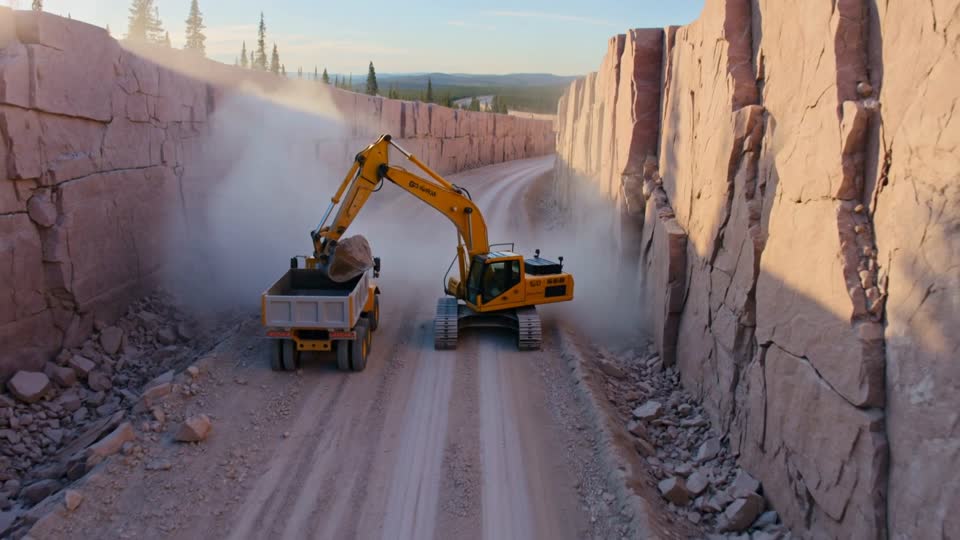
Water governs the whole sequence. Wet clay will not compact, a flooded cut stops a fleet, and in spring the same haul roads that worked in August may be under a road ban. Plan dewatering and drainage before production, not during it.
STA 0+480Equipment and productivity
An earthworks fleet is built around the haul. Excavators load; articulated or rigid trucks, or scrapers on long flat runs, carry; dozers spread; graders trim; smooth-drum, padfoot and vibratory rollers compact. Most larger contractors now run GPS machine control, loading the design surface into the dozer and grader so that crews cut to grade without waiting for stakes.
Productivity comes down to cycle time: how long it takes a truck to be loaded, haul, dump and return. Too few trucks and the excavator waits; too many and the trucks queue. The haul truck cycle time calculator finds the balance. The other big levers are haul distance, grade, ground conditions and whether material can be placed without re-handling.
STA 0+600The rules that apply
Excavation work is regulated by each province’s occupational health and safety rules. The headline numbers differ:
| Rule | Alberta | Ontario | British Columbia |
|---|---|---|---|
| Protect workers in excavations deeper than | 1.5 m | 1.2 m | 1.2 m |
| Engineer-designed support required | Temporary protective structures deeper than 3 m | Trenches deeper than 6 m or wider than 3.6 m | Written instructions of a qualified registered professional deeper than 6 m |
| Keep spoil and equipment back from the edge | At least 1 m | At least 1 m level area clear | See Part 20 |
Sources: Alberta OHS Code Part 32, sections 450, 453 and 456444; Ontario Regulation 213/91, sections 233, 234 and 235555; WorkSafeBC Regulation Part 2066.
Near pipelines the rules tighten. In Alberta, the owner of a pipeline within 30 m of the work must be asked to locate it4, and mechanical excavation is not allowed within 600 mm of a buried pipeline without the owner’s representative supervising4. Around federally regulated pipelines, the prescribed area is 30 m on each side of the centreline and a locate request is required at least three working days ahead77.
Not safety advice
These are summaries for planning. The regulation, your employer’s procedures and a competent person on site govern the actual work. The full province-by-province comparison is in trench safety and shoring.
STA 0+720What earthworks costs: 2026 tendered prices
Alberta Transportation and Economic Corridors publishes the average of the three lowest bids on every item it tenders. For earthworks on contracts tendered between May 2025 and June 2026, the provincial averages were:
| Item | Unit | 2026 avg | Contracts | 2025 | 2024 |
|---|---|---|---|---|---|
| Common ExcavationItem G225 | m³ | $11.20 | 24 | $8.96 | $10.89 |
| Subgrade ExcavationItem B100 | m³ | $28.34 | 15 | — | — |
| Rippable Rock Excavation - PremiumItem G210 | m³ | $16.53 | 2 | — | — |
| Solid Rock Excavation - PremiumItem G205 | m³ | $44.96 | 1 | — | — |
| Topsoil and Subsoil StrippingItem C055 | m³ | $8.74 | 3 | — | — |
| Topsoil and Subsoil PlacementItem C056 | m³ | $8.85 | 3 | — | — |
| Topsoil PlacementItem G300 | m² | $1.13 | 27 | $1.11 | $1.35 |
| Preparing Subgrade Surface (First Layer)Item B180 | m² | $2.03 | 21 | $1.56 | $2.32 |
| Clearing and MulchingItem G101 | ha | $16,439 | 20 | $7,356 | $28,029 |
| Erosion Control Barrier (Silt Fence)Item E435 | m | $14.30 | 21 | $11.10 | $17.09 |
| Hydro-SeedingItem E609 | ha | $12,582 | 15 | $10,678 | $12,564 |
Common excavation averaged $11.20 per m³8 across 24 contracts. The spread between regions is wide, which is a reminder that haul distance and ground conditions matter more than the item name:
| Region | Avg per m³ | Contracts |
|---|---|---|
| Southern region | $10.82 | 2 |
| Central region | $8.37 | 12 |
| North Central region | $14.21 | 4 |
| Peace region | $10.46 | 6 |
| Province | $11.20 | 24 |
These are highway-scale averages on large quantities. A small residential or commercial job pays more per cubic metre because mobilization, minimum charges and disposal fees are spread over far less material. Use the figures as a benchmark for the unit rate on a larger job, and as a sanity check on a quote, not as a price for a basement. The excavation cost guide covers smaller jobs and hourly equipment rates, and the unit price index lists every item.
STA 0+840What to send for a price
Contractors price what they can measure. A brief that gets a firm number usually includes:
- Drawings or a sketch with existing and design levels, or at least the area and depth of cut and fill.
- A geotechnical report, or what you know about the ground: clay, sand, rock, groundwater.
- Where surplus material can go, and where fill will come from.
- Access, working hours and any load restrictions on the roads in.
- Whether locates have been requested and whether there are private lines on the property.
- The schedule, including any window you must hit before freeze-up or a road ban.
Ask whether the quote is unit price or lump sum, how quantities will be measured, and what happens if the ground is wetter or rockier than expected. Those three answers decide most disputes on earthworks jobs.
Questions people ask
How much does excavation cost per cubic metre in Canada?
On large public highway contracts in Alberta, common excavation averaged $11.20 per m³8 in 2025–26, with regional averages from about $8 to $14. Small private jobs cost more per cubic metre because mobilization, minimum charges and disposal are spread over less material. See the excavation cost guide.
What is the difference between excavation and grading?
Excavation removes material to a depth; grading shapes the finished surface so it drains. Most earthworks jobs include both: bulk excavation and fill, then fine grading to design levels.
How deep can you dig before a trench needs shoring?
In Alberta, workers must be protected in an excavation deeper than 1.5 m4. In Ontario, British Columbia, Saskatchewan and the Atlantic provinces the trigger is 1.2 m. The protection can be sloping, benching, shoring or a trench box. See trench safety by province.
What is a swell factor?
The swell factor is how much a material bulks when it is dug. One bank cubic metre of clay becomes about 1.43 loose cubic metres1. Use it to size trucks and stockpiles; use the shrink factor to work out how much fill you need.
Do utility locates cover private lines on my property?
One-call centres notify their member facility owners, who mark their own lines. Lines you own privately, such as a service to an outbuilding or a private water line, are usually not marked and need a private locator.
Sources
- FM 5-434 Earthmoving Operations, Chapter 1, Tables 1-1 and 1-2U.S. Department of the Army (field manual; hosted copy on GlobalSecurity.org) · FM 5-434 (2000)
- Notification ProcessUtility Safety Partners · retrieved 2026-09-24
- Ontario Underground Infrastructure Notification System Act, 2012, S.O. 2012, c. 4Government of Ontario (e-Laws) · current to 2026-09-21
- Alberta OHS Code (Alta Reg 191/2021), Part 32 Excavating and TunnellingGovernment of Alberta (OHS legislation search) · retrieved 2026-09-24
- O. Reg. 213/91 Construction Projects, Part III Excavations (ss. 222-242)Government of Ontario (e-Laws) · consolidation current to 2026-09-21
- WorkSafeBC OHS Regulation Part 20, Construction, Excavation and Demolition (ss. 20.78-20.95)WorkSafeBC · retrieved 2026-09-24
- Canadian Energy Regulator Pipeline Damage Prevention Regulations - Authorizations (SOR/2016-124)Justice Laws Website (Government of Canada) · retrieved 2026-09-24
- Unit Price Averages (workbook updated 2026-06-24)Alberta Transportation and Economic Corridors · 2026
Related
-
 C-102
Site servicing & land development
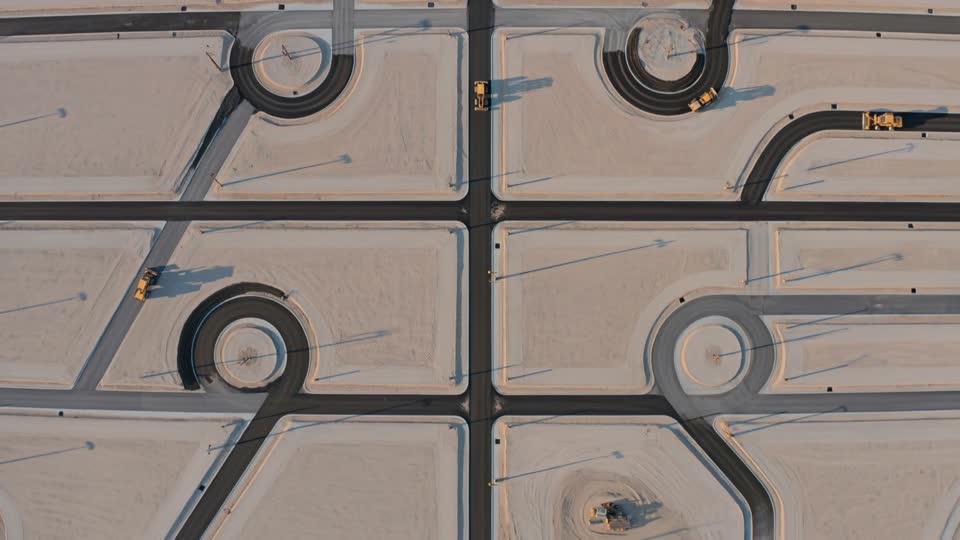
Water, sewer, storm and roads for new lots, and the agreements, levies and sequence that come with them.
C-102
Site servicing & land development
Water, sewer, storm and roads for new lots, and the agreements, levies and sequence that come with them.
-
 C-103
Underground utilities
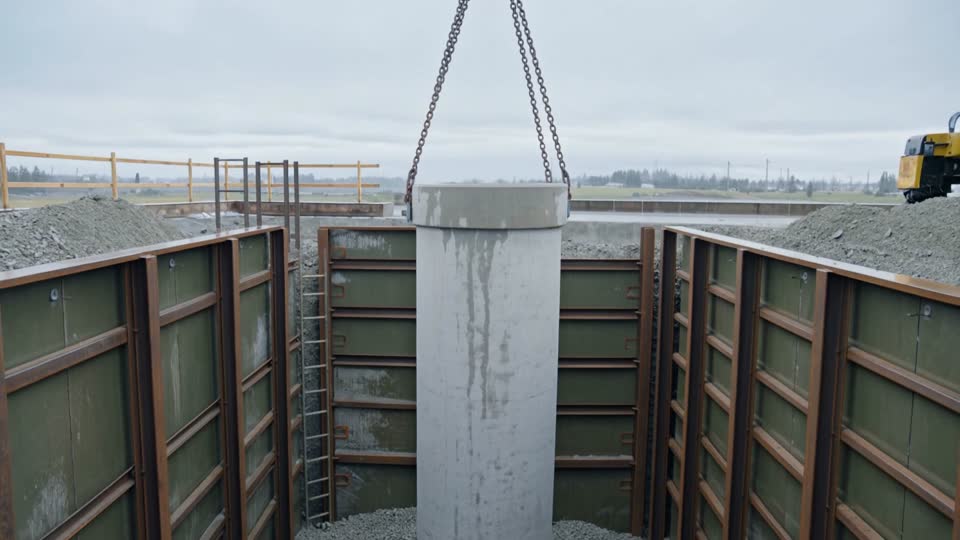
Watermain, sanitary and storm sewer, manholes and services, from trench design to testing.
C-103
Underground utilities
Watermain, sanitary and storm sewer, manholes and services, from trench design to testing.
-
 C-104
Roadbuilding & paving
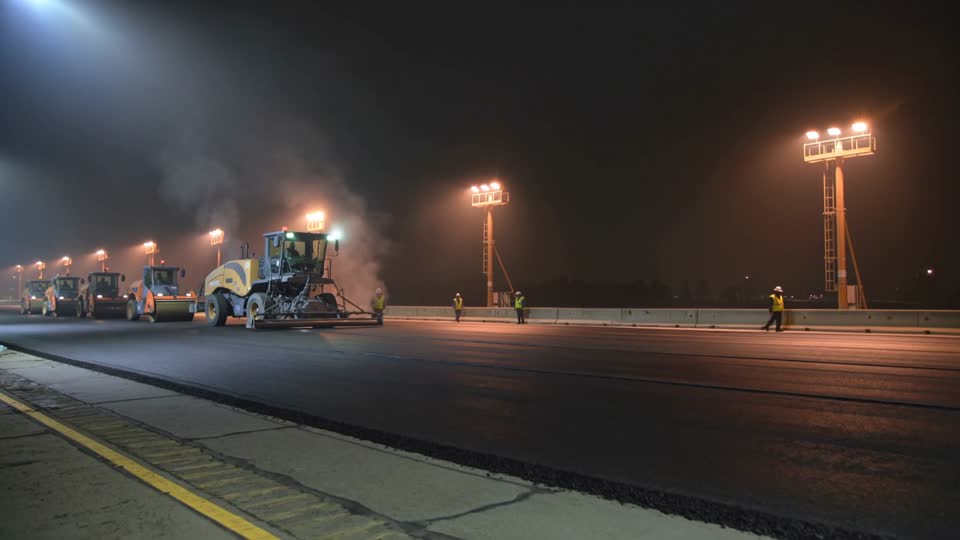
How Canadian roads are built layer by layer, and what drives paving, milling and rehabilitation costs.
C-104
Roadbuilding & paving
How Canadian roads are built layer by layer, and what drives paving, milling and rehabilitation costs.