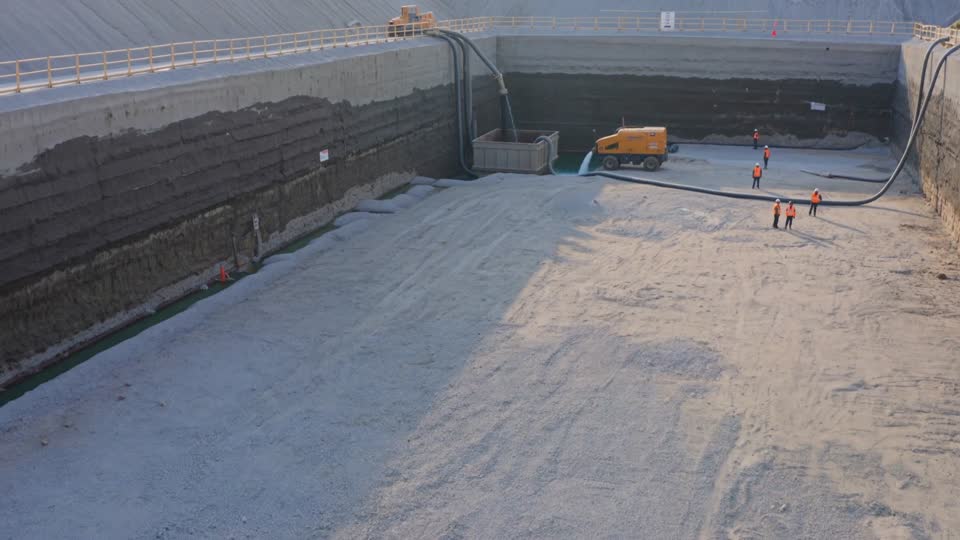
Discipline · Sheet C-115
Dewatering
Water fills a hole faster than most owners expect. Dewatering is the trade that keeps an excavation dry enough to work in, and it usually needs a permit before that water can legally go anywhere.
Almost any excavation below the water table, or deep enough to catch surface runoff and perched water, needs some form of dewatering to stay workable. The methods are well established: sumps, well points, deep wells and eductors. The part owners most often miss is that the water has to go somewhere legally, and in most Canadian municipalities that means a permit before a pump is ever turned on.
STA 0+120What dewatering covers
Dewatering is the general term for controlling groundwater and surface water so that an excavation, trench or foundation can be built in dry, stable conditions. It ranges from a single pump in a low corner of a basement excavation to a ring of deep wells running for months around a large below-grade structure. The right method depends on soil type, how much water is moving through it, and how deep and how large the excavation is:
- Sumps. A pit dug at the low point of an excavation, pumped out as water collects in it; the simplest and lowest-cost method, suited to low inflow in stable soil.
- Well points. A line of small-diameter wells connected to a header pipe and a vacuum-assisted pump, drawing the water table down along a trench or excavation perimeter.
- Deep wells. Individual pumped wells, spaced around a larger or deeper excavation, each with its own submersible pump; used where well points cannot reach the needed depth or soil permeability is high.
- Eductors. Jet-pump systems that can achieve a deeper drawdown than standard well points in low-permeability soils, at the cost of lower efficiency per well.
See underground utilities for how dewatering fits into trench and manhole construction, and the dewatering cost guide for how these methods are typically priced.
STA 0+240Why the water shows up
Water reaching an excavation usually comes from one or more of a few sources: the natural water table, which sits at different depths depending on soil, season and proximity to a river or lake; perched water sitting on a layer of less permeable soil above the main water table; surface runoff and precipitation entering an open excavation directly; and, less often, an artesian condition where water under pressure in a confined layer rises once it is exposed. A geotechnical report is the normal starting point for understanding which of these is likely on a given site, since the right dewatering method depends on where the water is coming from as much as how much of it there is.
Soil type changes the picture as much as the source does. A well-drained sand or gravel can transmit a lot of water quickly, which calls for a system that can move volume, while a tight clay may hold water back until it is disturbed and then bleed slowly for a long time, which calls for patience and a lower flow rate more than raw pumping capacity. Getting this wrong in either direction adds cost: an undersized system cannot keep the excavation dry, and an oversized one runs pumps, generators and monitoring longer and harder than the site actually needs.
STA 0+360Discharge permits
Removing water from an excavation is only half the job; the other half is putting it somewhere legally. Discharging pumped water into a municipal storm or sanitary sewer, a ditch, or a natural watercourse is commonly regulated, and doing it without approval can put a contractor offside a municipal bylaw even when the water itself is clean. Two examples from Canadian cities show the pattern:
- The City of Calgary requires a drainage permit before directly or indirectly releasing water into its stormwater system, and specifically lists water collected in an excavation or trench that needs to be removed to continue work as a situation that needs one1.
- The City of Toronto requires a Discharge Permit or Agreement whenever private water, meaning water not purchased from the city, is discharged into its sewer system, and lists construction dewatering as a typical example of an activity that needs one2.
Provincial approvals can apply on top of a municipal permit, particularly where discharge is proposed to a natural watercourse rather than a municipal sewer, or where the volume or water quality raises an environmental concern. Requirements, application lead times and testing conditions differ by municipality and by province, so this page does not generalize a single national rule.
Not legal advice
Confirm the discharge permit or approval that applies to your specific municipality and receiving system before pumping starts. A permit application can take weeks to process, so this is worth checking well before the excavation that needs dewatering is scheduled to open.
STA 0+480Sediment and erosion control
Pumped water often carries sediment, and most discharge permits set a limit on suspended solids or turbidity, not just a volume. Settling tanks, filter bags and sediment traps ahead of the discharge point are standard ways of meeting that limit before water leaves the site. Silt fence and other erosion-control barriers around the excavation and any temporary discharge channel are a related, complementary control, priced on Alberta's highway program as its own item:
| Item | Unit | 2026 avg | Contracts | 2025 | 2024 |
|---|---|---|---|---|---|
| Erosion Control Barrier (Silt Fence)Item E435 | m | $14.30 | 21 | $11.10 | $17.09 |
Silt fence averaged $14.30 per m3 on Alberta provincial highway contracts in 2025–26. See erosion and sediment control for how these measures fit into an overall site plan, since dewatering discharge is usually only one part of a site's sediment control needs, alongside stockpiles, exposed slopes and vehicle tracking.
STA 0+600Where dewatering meets excavation safety
A sump pit or a line of well points is itself a small excavation, and the same protection rules that apply to any trench apply to it. In Alberta, a worker must be protected once an excavation reaches 1.5 m deep and the worker is closer to the wall than the excavation's depth4; most other provinces set that trigger at 1.2 m. Dewatering equipment is also commonly installed inside an already-open trench or excavation that is being dewatered for a separate reason, such as a watermain or sewer installation, which means the dewatering crew is working inside the same protected zone as the pipe crew. See trench safety and shoring for the full province-by-province comparison.
STA 0+720What to send for a price
A dewatering brief that gets a useful response usually includes:
- A geotechnical report, or what is known about soil type and the depth to groundwater.
- The excavation's depth, footprint and expected duration open.
- Where the water will be discharged, and whether a permit application has been started.
- Access for well points, deep wells or a header pipe run around the excavation perimeter.
- Any known water quality concern, such as a former industrial use of the site.
Ask how the quote handles duration risk: a dewatering system priced for a four-week excavation can cost significantly more if the schedule slips, since pump rental and monitoring are usually billed by time, not by the volume of water actually removed. Also ask who is responsible for the discharge permit application itself: on some jobs the contractor applies in their own name, and on others the owner applies and hands the contractor an approved permit to work under, which changes who carries the risk of an application delay.
Questions people ask
Do I need a permit to discharge water from a construction site?
In most Canadian municipalities, yes. Calgary requires a drainage permit before releasing water into its stormwater system, including water pumped from an excavation1, and Toronto requires a Discharge Permit or Agreement for private water such as construction dewatering discharged to its sewer system2. Confirm the specific requirement with your municipality before pumping starts.
What is the difference between well points and deep wells?
Well points are a line of shallow wells on a header pipe pulled down by vacuum, suited to trenches and moderate depths. Deep wells are individually pumped and can reach greater depths or handle higher inflow, and are more often used around large or deep excavations.
How long does dewatering take on a typical excavation?
It depends on soil permeability, the volume of water present and the excavation size, so there is no standard duration; a system is generally run continuously from before excavation starts until backfill or the permanent structure makes it unnecessary.
Does dewatering need its own excavation safety plan?
Sump pits and wellpoint trenches are excavations in their own right and fall under the same provincial protection rules as any other trench; in Alberta that trigger is 1.5 m deep4. See trench safety and shoring.
Does pumped groundwater need to be tested before discharge?
Discharge permits commonly set limits on suspended solids or other water quality parameters, not just volume, so sediment control such as settling tanks or silt fence is usually part of the same scope. Confirm the specific testing condition attached to your discharge permit.
Sources
- Stormwater drainage and permitsThe City of Calgary · 2026-09-24
- Discharge Permits & Agreements for Private WaterCity of Toronto · 2026-09-24
- Unit Price Averages (workbook updated 2026-06-24)Alberta Transportation and Economic Corridors · 2026
- Alberta OHS Code (Alta Reg 191/2021), Part 32 Excavating and TunnellingGovernment of Alberta (OHS legislation search) · retrieved 2026-09-24
Related
-
 C-101
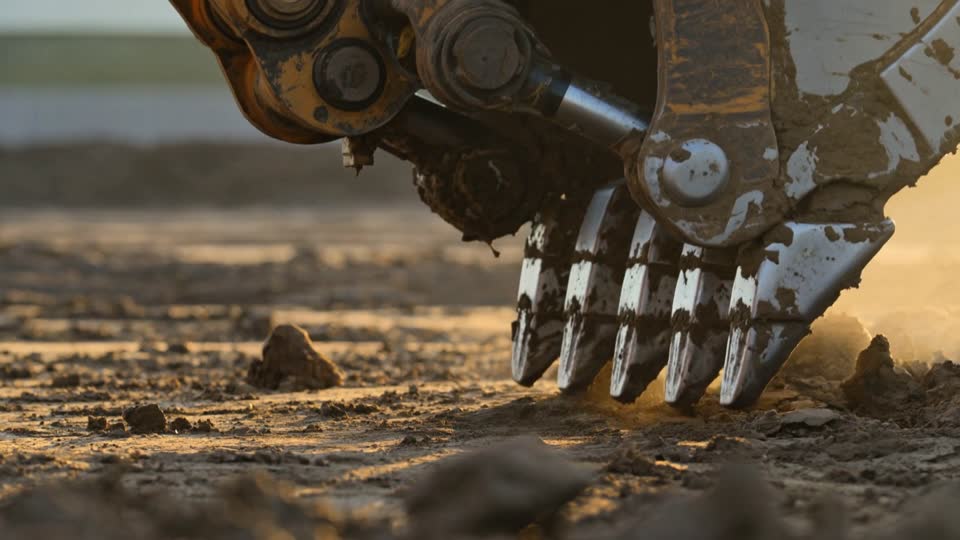
Earthworks & excavation
Stripping, bulk excavation, cut and fill, rock, compaction and the volumes that drive every estimate.
C-101
Earthworks & excavation
Stripping, bulk excavation, cut and fill, rock, compaction and the volumes that drive every estimate.
-
 C-102
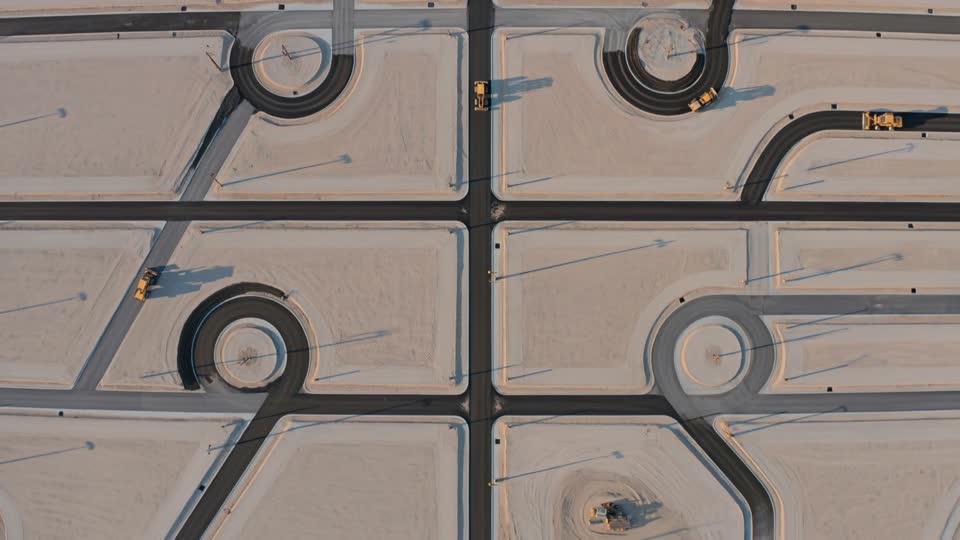
Site servicing & land development
Water, sewer, storm and roads for new lots, and the agreements, levies and sequence that come with them.
C-102
Site servicing & land development
Water, sewer, storm and roads for new lots, and the agreements, levies and sequence that come with them.
-
 C-103
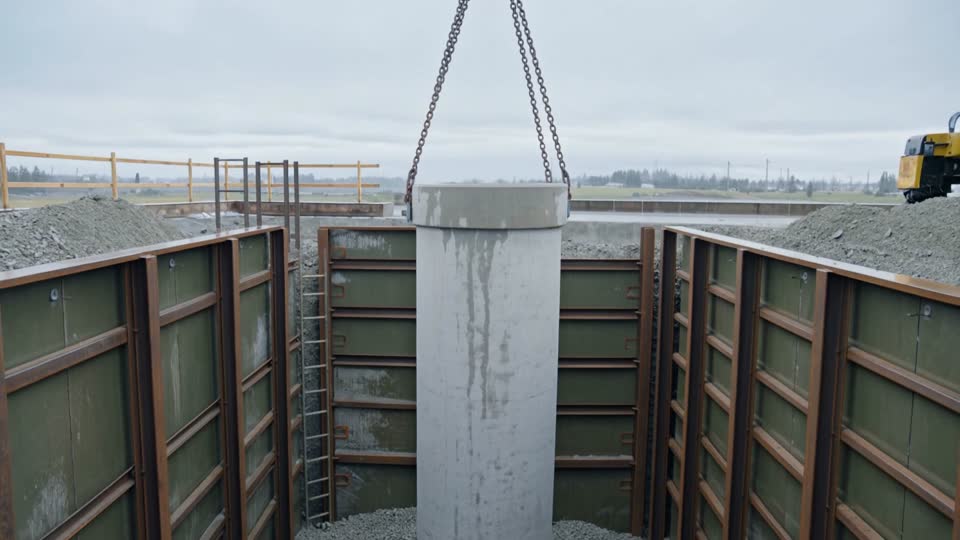
Underground utilities
Watermain, sanitary and storm sewer, manholes and services, from trench design to testing.
C-103
Underground utilities
Watermain, sanitary and storm sewer, manholes and services, from trench design to testing.