Cost guide · Sheet K-316
How much does dewatering cost?
Dewatering has no published day rate, hourly rate or permit fee anywhere in Canada. It is billed for as long as it runs, which is exactly why duration, not equipment, usually dominates the final cost.
STA 0+120Why there is no published dewatering price
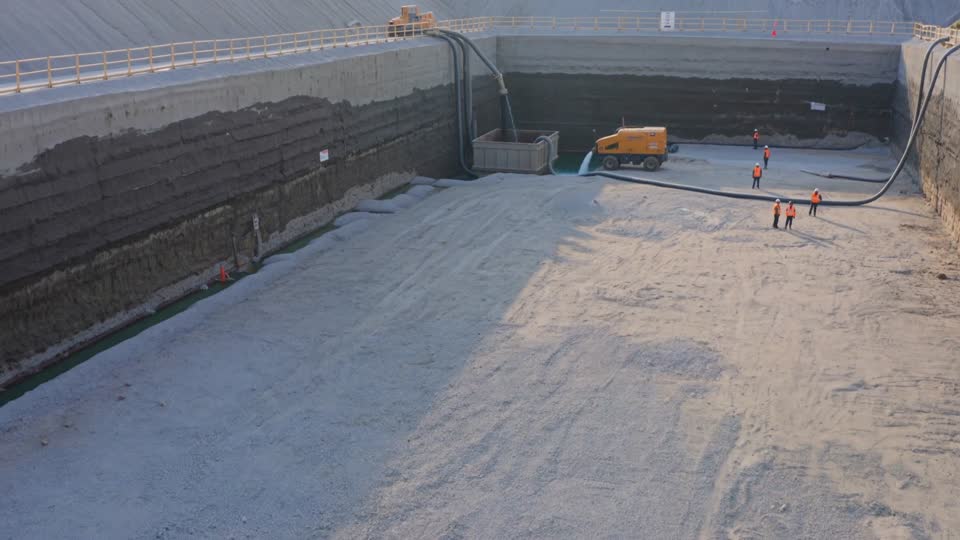
Dewatering — removing groundwater from an excavation so work can proceed in dry conditions, using sumps and pumps, well points, or deeper wells depending on the ground and the depth — is not a standard highway tender pay item, and no provincial or municipal body publishes a day rate, hourly rate or permit fee for it. It is billed by specialty dewatering contractors for as long as the system has to run, which can be days on a small basement excavation or months on a deep or large-footprint site. The full method comparison (sumps versus well points versus deep wells) is in the dewatering discipline page.
STA 0+240The closest official proxy: wet excavation pricing
Alberta's highway tenders do carry one directly related item: wet excavation, priced separately from common (dry) excavation because digging in standing or seeping water is a different, slower operation. On 2026 tenders, wet excavation (Type 2) averaged $8.64 per m³1 per cubic metre, against $11.20 per m³1 for common excavation on the same tender list. That wet-excavation price captures the extra difficulty of digging in wet ground itself — it is not a dewatering system price, and it does not include the cost of a standalone pump-and-well-point system running for days or weeks to keep a larger excavation dry before and during the work. Treat it as evidence that wet ground changes an excavation's price, not as a dewatering rate.
STA 0+360What actually drives a dewatering quote
Because there is no published rate, a real dewatering quote is built from:
- Duration, above everything else. A dewatering system is billed for the time it runs, not the volume of water moved in a single day; a site that needs three extra weeks of pumping because of an unexpectedly high water table costs roughly three extra weeks of dewatering, regardless of what the original estimate assumed.
- Method. A sump and pump is the least-cost setup for shallow, low-volume seepage; well points (a ring of small wells connected to a header pipe) handle more difficult ground over a larger area; deep wells are used for the largest excavations or the highest water tables, and cost the most to install.
- Soil type and water table depth. Sand and gravel transmit water fast and can need a more aggressive system than clay, which drains slowly but can still saturate and destabilize an excavation.
- Discharge permit and water treatment. Pumped water usually cannot go straight into a storm sewer or watercourse without permission, and sometimes without treatment first — see the permits section below.
- Standby and monitoring. A system running overnight or over a weekend, or one needing continuous monitoring to prevent an excavation from flooding if it fails, adds ongoing cost beyond the pumps themselves.
STA 0+480Dewatering permits
Discharging pumped groundwater usually requires permission from the municipality (if going to a storm sewer) or the provincial environment ministry (if going to a watercourse or being drawn in volume from an aquifer), and some cities require water quality testing before discharge is approved. No official permit fee for Calgary, Toronto or any other Canadian municipality was found published in a comparable format for this guide — fees and thresholds are set locally and change by bylaw. Confirm the current requirement and fee directly with the municipality's engineering or environmental services department before committing to a schedule, since permit approval time can affect the project timeline as much as the pumping itself.
STA 0+600What changes the number on a small excavation
A single basement or short trench dewatering job does not scale down cleanly from a larger site:
- Mobilization. Bringing pumps, well points and a generator to a small site costs close to the same as a larger one, spread over a shorter run.
- Minimum rental periods. Pump and well-point equipment is often rented on a weekly minimum regardless of how few days it actually runs.
- Unknown water table. A geotechnical report reduces the risk, but the actual water table on the day excavation starts can differ from what was assumed, especially after a wet season — budget contingency time into a dewatering estimate rather than treating the first quote as fixed.
- Season. Spring runoff and periods of heavy rain raise the water table and can extend how long dewatering needs to run for the same excavation.
STA 0+720Why getting dewatering right matters beyond cost
Under-sizing or skipping dewatering does not just risk a wetter job site — it risks the work itself. Concrete will not cure properly if it is poured into standing water, a trench excavated below the water table without dewatering can slump or collapse its walls, and compacted fill placed over saturated ground will not achieve the density a specification requires. On most projects, the cost of adequate dewatering is materially smaller than the cost of redoing work that failed because the ground was not actually dry when it needed to be. This is also why a geotechnical report's groundwater findings matter as much to a dewatering estimate as they do to the excavation and foundation design itself.
STA 0+840What to send for a price
For a comparable dewatering quote: the excavation size and depth, any known groundwater or geotechnical information, expected duration of the excavation work itself, where pumped water can discharge to, and the season. A dewatering contractor prices the system and the expected run time together, so the more certainty you can give on how long the excavation will stay open, the tighter the quote will be.
Questions people ask
How much does dewatering cost per day?
No official day rate is published. Dewatering is billed for as long as the system runs, and duration is usually the largest single driver of total cost — a longer-than-expected excavation schedule extends the dewatering cost by roughly the same proportion. Get a quote against your project's expected duration, not a generic day rate.
How is dewatering calculated?
A dewatering contractor estimates the expected groundwater inflow from soil type and water table depth, sizes a system (sump, well points or deep wells) to handle it, and prices that system plus labour and monitoring for the expected duration of the excavation. There is no simple published formula or rate to calculate it from independently.
How long does dewatering take?
As long as the excavation it supports stays open — anywhere from a few days on a small basement to months on a large or deep site. No official average duration is published, since it depends entirely on the specific excavation schedule and ground conditions.
How much does a dewatering permit cost in Calgary?
No published fee was found for this guide. Confirm the current requirement and any fee directly with the City of Calgary's engineering or environmental services department before starting work that requires discharging pumped water.
How much does a dewatering permit cost in Toronto?
No published fee was found for this guide. Confirm the current requirement and any fee directly with the City of Toronto before starting work that requires discharging pumped water to a storm sewer or watercourse.
Does wet ground always need dewatering before excavation?
Not always — some wet excavation can proceed as a slower, priced-as-wet dig (see $8.64 per m³1 above) rather than being fully dewatered first. Whether standalone dewatering is needed depends on the water volume, the excavation depth, and whether the ground needs to be dry for what happens next, such as pouring concrete or laying pipe bedding.
Sources
- Unit Price Averages (workbook updated 2026-06-24)Alberta Transportation and Economic Corridors · 2026
- Alberta OHS Code (Alta Reg 191/2021), Part 32 Excavating and TunnellingGovernment of Alberta (OHS legislation search) · retrieved 2026-09-24
Related
-
 K-301
Excavation cost
Per cubic metre on tendered work, per hour for equipment, and what changes the number on a small job.
K-301
Excavation cost
Per cubic metre on tendered work, per hour for equipment, and what changes the number on a small job.
-
 K-302
Cost to build a road
What a kilometre of road costs, layer by layer, from gravel lease roads to paved highway.
K-302
Cost to build a road
What a kilometre of road costs, layer by layer, from gravel lease roads to paved highway.
-
 K-303
Asphalt paving cost
Hot-mix by the tonne, paving by the square metre, and milling, overlays and parking lots.
K-303
Asphalt paving cost
Hot-mix by the tonne, paving by the square metre, and milling, overlays and parking lots.