
Cost guide · Sheet K-301
How much does excavation cost in Canada?
There is no single price for "excavation." There is a price per cubic metre on a highway contract, a price per hour for a machine and operator, and a price for a basement that depends on everything from the soil to the size of the gate. Here is what is actually published, and how to use it.
Every excavation quote is really a price per unit of volume, multiplied by a volume, plus everything it takes to get a machine on site and the spoil off it. The only Canadian excavation prices published anywhere with a stated method are Alberta's, and they are averages of contractor bids on large highway jobs, not quotes for a basement or a service trench. This guide shows those prices, explains why a small job costs more per cubic metre, and lays out what to send a contractor to get a real number back.
STA 0+120What "excavation cost" is actually pricing
Excavation is sold by the cubic metre, and a cubic metre is not a fixed thing. Ground that measures one cubic metre in place (bank volume) bulks up once it is dug (loose volume) and shrinks again once it is compacted (compacted volume). A quote priced per bank cubic metre and a quote priced per truck load (loose volume) can look very different for the same hole. The swell and shrink converter and the excavation volume calculator convert between them before you compare two quotes.
Contracts also split excavation into pay items, because the cost per cubic metre is not the same for each:
- Common excavation. Clay, silt, sand, gravel, till: anything an excavator digs without ripping or blasting.
- Rock excavation. Rippable rock a dozer can break, and solid rock that needs drilling and blasting. Both carry a premium over common excavation.
- Subgrade excavation. The cut that shapes the surface a road's granular base sits on, usually shallower and more finish-sensitive than bulk common excavation.
- Borrow excavation. Fill trucked in from a pit because the site's own cuts do not produce enough suitable material.
The full scope, sequence and volume math are covered in the earthworks and excavation discipline page. This guide is about the price.
STA 0+2402026 prices: Alberta highway tenders, per cubic metre
Alberta Transportation and Economic Corridors publishes the average of the three lowest bids on every excavation item it tenders, weighted by bid quantity, across contracts tendered between May 1, 2025 and June 24, 2026, at highway quantities:
| Item | Unit | 2026 avg | Contracts | 2025 | 2024 |
|---|---|---|---|---|---|
| Common ExcavationItem G225 | m³ | $11.20 | 24 | $8.96 | $10.89 |
| Borrow ExcavationItem G235 | m³ | $15.99 | 6 | $13.05 | $12.99 |
| Borrow Excavation - Contractor SuppliedItem G236 | m³ | $23.67 | 15 | $23.86 | $30.81 |
| Subgrade ExcavationItem B100 | m³ | $28.34 | 15 | — | — |
| Solid Rock Excavation - PremiumItem G205 | m³ | $44.96 | 1 | — | — |
| Rippable Rock Excavation - PremiumItem G210 | m³ | $16.53 | 2 | — | — |
| Channel ExcavationItem G220 | m³ | $19.42 | 19 | $6.65 | $13.61 |
Common excavation averaged $11.20 per m³1 in 2026, up from $8.96 in 2025 and $10.89 in 2024 — a 25% increase year over year, after a dip the year before. That swing on its own is a reason to treat any single year's average as a benchmark, not a fixed price. Regionally, the spread is wide:
| Region | Avg per m³ | Contracts |
|---|---|---|
| Southern region | $10.82 | 2 |
| Central region | $8.37 | 12 |
| North Central region | $14.21 | 4 |
| Peace region | $10.46 | 6 |
| Province | $11.20 | 24 |
Central Alberta's lower average and North Central's higher one mostly reflect haul distance, ground conditions and the size of the contracts in each region that year, not a stable geographic rule. No other province publishes a comparable average bid price for excavation; Ontario's Ministry of Transportation keeps an internal Average Price Index but does not release the underlying dollar figures, and Saskatchewan and the Atlantic provinces publish no average at all.
STA 0+360What changes the number on a small job
These are highway averages on contracts moving hundreds of thousands of cubic metres. A basement, a service trench or a half-acre pad pays more per cubic metre, for reasons that do not show up in a highway tender:
- Mobilization. Moving an excavator, a truck and a crew to a one-day job costs the same as moving them to a month-long one; on a highway contract that cost is spread over the whole job, on a driveway it is not.
- Minimum charges. Most contractors and disposal sites have a minimum call-out or a minimum load charge regardless of how little material actually moves.
- Disposal fees. A highway job usually balances cut and fill on site or hauls to a nearby borrow pit under the same contract. A city lot has to truck spoil to a licensed disposal or fill site and pay a tipping fee per load.
- Access. A machine that has to work through a gate, around a fence or off a narrow lane works slower and may need a smaller, less efficient machine.
- Season. Frozen ground slows digging and can require ripping or thawing; wet ground needs dewatering before it needs excavating. Both add time, not just volume.
- Utility conflicts. Digging near a marked line means hand-exposing it or working with a spotter, which is slower than open cutting. See call before you dig.
A private job is not being overcharged when it costs three or four times the highway per-cubic-metre average; it is paying for a different cost structure spread over far less volume. Use the highway average as a sanity check on the unit rate inside a larger quote, not as the price you should expect to pay for a basement.
STA 0+480Excavation cost per hour and per day
Alberta's published averages are per cubic metre on a bid contract, not per hour of equipment time, and no Canadian government body publishes an official hourly or daily excavation rate. An hourly rate is a private commercial quote, and it moves with:
- Machine size: a 1.5-tonne mini-excavator, an 8-tonne machine and a 30-tonne excavator are different rentals with different operators.
- Whether an operator is included, and whether it is a unionized crew (see the wage tables behind provincial collective agreements) or an owner-operator.
- Fuel, which the contractor either carries in the rate or bills separately.
- A minimum billed period, commonly a half day or full day even for a shorter job.
- Attachments: a hydraulic hammer, auger or grapple changes the rate from a bare bucket.
Because there is no published benchmark, the only reliable way to know whether an hourly quote is reasonable is to get two or three for the same scope, machine size and duration. The haul truck cycle time calculator helps translate a per-hour excavator and truck rate into a per-cubic-metre cost for comparison against the highway averages above.
STA 0+600Cost to excavate a basement or a house lot
"How much does it cost to excavate a basement" has no single published answer, because the drivers are specific to the lot: depth, soil type, groundwater, access for a truck, how far spoil has to be hauled and disposed, and whether shoring is required once the hole passes the depth in trench safety and shoring. What a contractor can price from is a volume and a scope.
The mechanical way to think about it: work out the bank volume with the cut and fill calculator or the excavation volume calculator, convert to loose volume with the swell factor for the soil type, and multiply by a private unit rate — which, per the section above, will be several times the $11.20 per m³1 highway average once mobilization, disposal and access are added in. That gives an order-of-magnitude figure to sanity-check a quote, not a number to quote a client yourself.
For rock, add the premium separately rather than blending it into a single average: it is a materially different item, covered next.
STA 0+720Rock excavation: rippable versus solid
Rock is not one price. Alberta's tenders separate rippable rock, which a dozer or excavator can break without drilling, from solid rock, which needs drilling and blasting:
- Rippable rock excavation averaged $16.53 per m³1 in 2026 — a premium over common excavation, but well short of blasting costs.
- Solid rock excavation averaged $44.96 per m³1, roughly four times the common excavation average, reflecting drill-and-blast crews, explosives permits and slower production.
A geotechnical report is the only reliable way to know which category applies before digging starts; without one, a contractor is pricing an unknown and will build in a contingency. If the ground turns out rockier than assumed, expect a change order rather than a fixed price holding.
STA 0+840What to send for a firm quote
A brief that gets a real number back usually includes:
- A sketch or drawing with existing and design levels, or at minimum the plan area and the depth of cut.
- What is known about the ground: soil type, groundwater, a geotechnical report if one exists.
- Where spoil will go, and whether fill needs to be brought in.
- Site access: gate width, overhead lines, fences, and whether a full-size excavator can reach the work.
- Whether locates have been requested and whether private lines are known to cross the site.
- Timing, including any freeze-up or road-ban window that has to be hit.
Ask whether the number is a firm unit price or a lump sum, how volume will be measured or verified, and what happens if the ground is wetter or rockier than assumed. Those answers, more than the rate itself, decide how the job actually settles. The unit price index lists every Alberta item code if you want to check a specific pay item against the current average.
Questions people ask
How much does excavation cost per cubic metre in Canada?
On Alberta provincial highway contracts, common excavation averaged $11.20 per m³1 in 2025–26, up from $8.96 in 2025. Regional averages ranged from about $8 to $14. These are highway-scale bid averages; small private jobs cost more per cubic metre once mobilization, minimum charges and disposal are added. See the earthworks and excavation discipline page for how volumes are measured.
How much does excavation cost per hour?
No Canadian government publishes an official hourly excavation rate. Hourly rates are private quotes that depend on machine size, whether an operator and fuel are included, and any minimum billed period. Get two or three quotes for the same machine size and duration rather than relying on a benchmark that does not exist.
How much does it cost to excavate a basement?
There is no published fixed price. The cost depends on the volume dug, soil and groundwater conditions, access for equipment and trucks, disposal distance, and whether shoring is required at depth. Use the excavation volume calculator to get a bank volume, then price it as several times the highway average per cubic metre once private-job factors are added.
Is rock excavation more expensive than common excavation?
Yes. On 2026 Alberta tenders, rippable rock averaged $16.53 per m³1 against $11.20 per m³1 for common excavation, and solid rock requiring drilling and blasting averaged $44.96 per m³1, roughly four times the common excavation rate. A geotechnical report is the only way to know which applies before the ground is opened.
How do you calculate the cost of excavation?
Work out the bank volume of the cut, convert to the volume you are actually paying for (bank, loose or compacted, depending on how the contract measures it) with the swell and shrink converter, then multiply by a unit rate. Use the Alberta highway averages above as a check on the rate, not as the rate itself, for anything smaller than a highway contract.
Why is excavation cost per cubic yard different from per cubic metre?
One cubic metre equals about 1.31 cubic yards, so a price per cubic yard will always look lower than the same price per cubic metre for identical work. Confirm which unit a quote is using before comparing it to the metric figures on this page or to another bid quoted in cubic yards.
Sources
- Unit Price Averages (workbook updated 2026-06-24)Alberta Transportation and Economic Corridors · 2026
Related
-
 K-302
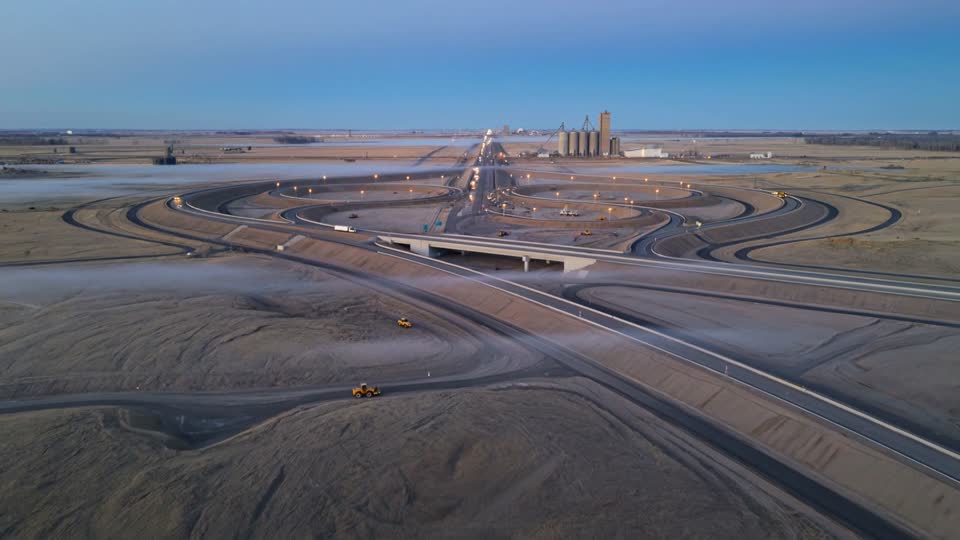
Cost to build a road
What a kilometre of road costs, layer by layer, from gravel lease roads to paved highway.
K-302
Cost to build a road
What a kilometre of road costs, layer by layer, from gravel lease roads to paved highway.
-
 K-303
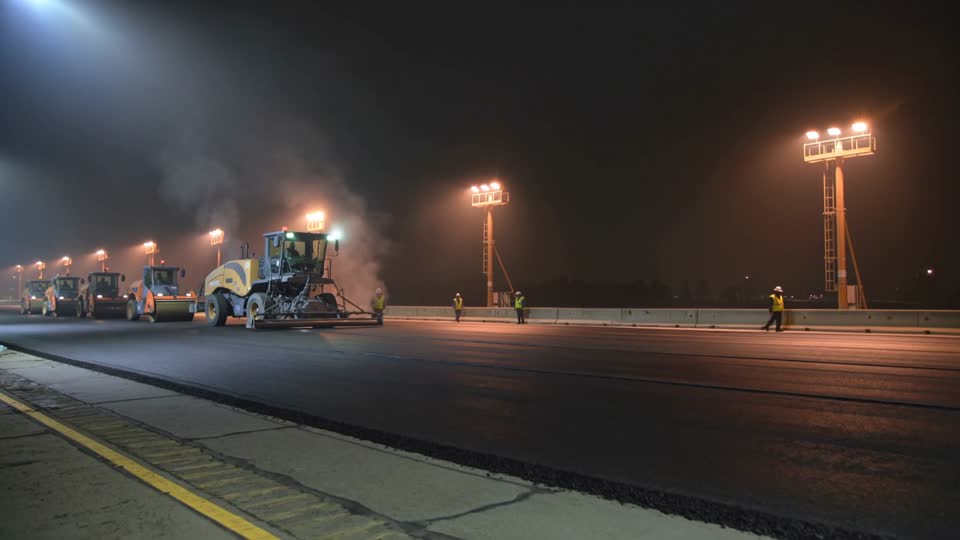
Asphalt paving cost
Hot-mix by the tonne, paving by the square metre, and milling, overlays and parking lots.
K-303
Asphalt paving cost
Hot-mix by the tonne, paving by the square metre, and milling, overlays and parking lots.
-
 K-304
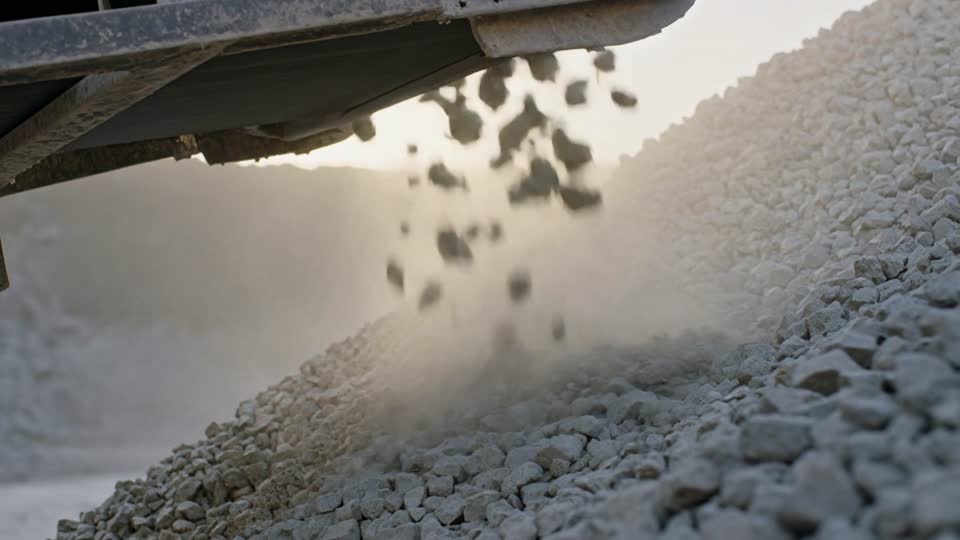
Gravel cost per tonne
Base, subbase, surfacing and pit run: supply, haul and placed prices by the tonne.
K-304
Gravel cost per tonne
Base, subbase, surfacing and pit run: supply, haul and placed prices by the tonne.