
Guide · Sheet G-408
The site servicing process
Before a lot can be built on, someone has to bring water, sewer, storm drainage and a road to its edge. That work follows the same broad sequence in every Canadian municipality, even though the drawings, specifications and levies are each municipality’s own.
"Site servicing" covers the underground and surface infrastructure that turns raw land into a buildable lot: watermain, sanitary sewer, storm sewer, roads, curb and sidewalk, plus the grading that ties it all together. It is a municipal approvals process as much as a construction one, and the sequence below is close to universal even though every city’s own drawings and specifications sit underneath it.
STA 0+120From approval to acceptance
- Land-use approval. The parcel is rezoned or redesignated, and a subdivision or development plan is approved by the municipality.
- Servicing agreement. The developer and municipality sign an agreement setting out what infrastructure the developer builds, what levies are payable, and the security (letter of credit or bond) posted against completion.
- Engineering drawings. A consulting engineer designs the water, sanitary, storm and road works to the municipality’s current design guidelines and standard drawings, and the municipality reviews and approves them before a permit issues.
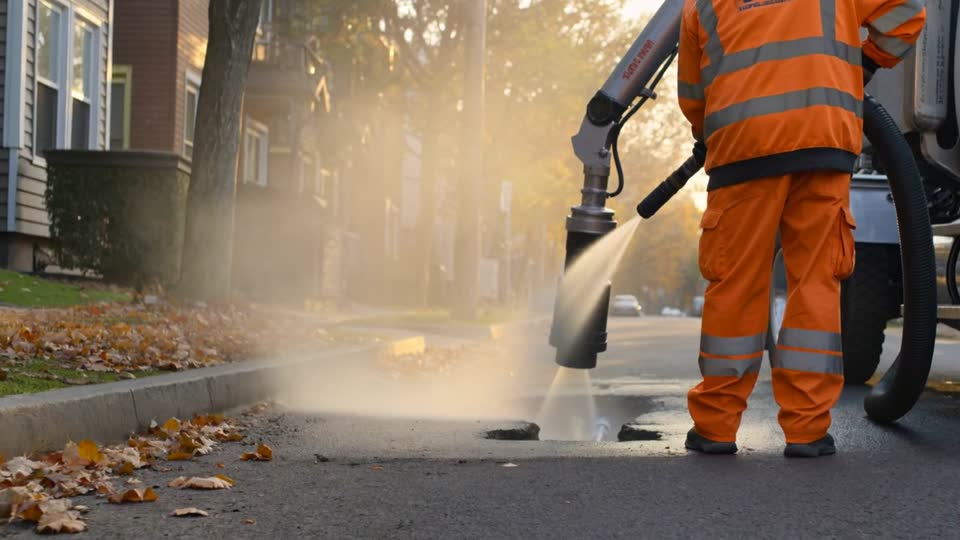
- Locates and erosion control. Before ground is opened, utility locates go in and erosion and sediment control is installed; see call before you dig and erosion and sediment control.
- Construction. Earthworks, underground utilities, road base and surfacing are built and inspected against the approved drawings, usually with a resident inspector or the municipality’s own inspection staff on site for key stages.
- Testing and deficiencies. Pipes are pressure- and leak-tested, compaction is verified, and a deficiency list is worked through before the municipality will issue any form of interim acceptance.
- Warranty and final acceptance. The developer typically carries a maintenance or warranty period (commonly a year or more, set by the servicing agreement) before the municipality takes over ownership and maintenance of the completed infrastructure and releases the posted security.
STA 0+240Whose specifications apply
There is no single national servicing specification; each municipality (or province, for provincial highway connections) publishes its own, and a design has to follow the one in effect where the lot actually sits:
| Jurisdiction | Specification system |
|---|---|
| Calgary | Standard Specifications Waterworks Construction and Sewer Construction, 2025 edition11; Design Guidelines for Subdivision Servicing, 2020 edition1; Standard Specifications for Road Construction, 2021 edition2 |
| Edmonton | Complete Streets Design and Construction Standards, published November 20253 |
| Toronto | List T1 Construction and Material Specifications and List T2 Standard Road Works Drawings, many amending OPSS.MUNI4 |
| Ontario (general) | Ontario Provincial Standards (OPSS specifications and OPSD drawings), published each April and November5 |
| British Columbia (municipal) | Master Municipal Construction Documents (MMCD), 2019 Platinum Edition6 |
Using an out-of-date edition, or a neighbouring municipality's standard drawing, is one of the more common reasons a drawing package gets sent back for revision before approval.
STA 0+360Levies and who pays for what
A servicing agreement typically splits infrastructure into on-site works (the pipes and roads that serve the subdivision itself, built and paid for by the developer) and off-site levies (a per-lot or per-hectare charge that funds the shared trunk infrastructure, like a regional lift station or an arterial road upgrade, that the subdivision draws capacity from but did not build alone). Levy rates are set individually by each municipality and change over time, so a current number has to come from that municipality's own bylaw or fee schedule rather than a general figure. See lot and subdivision servicing cost for how on-site servicing costs are typically broken down.
The servicing agreement is also where the posted security is set, usually a letter of credit or bond sized to the estimated construction value of the on-site works. That security is what the municipality can draw on if the developer does not finish, or does not fix deficiencies, and it is not released until final acceptance, so it sits alongside any bid or performance bond a contractor working for the developer has separately posted. See bid, performance and payment bonds for how those work on the construction side of the same project.
STA 0+480What construction actually involves
The bulk of a servicing job is earthworks and underground utilities: stripping and grading the site, trenching and laying watermain, sanitary and storm sewer with the bedding and cover the local specification calls for, then building up the road structure over the top. Alberta's average subgrade excavation price on provincial highway tenders, $28.34 per m³7, is a useful order-of-magnitude reference for the earthmoving portion of a job, though a subdivision-scale contract prices its own mobilization, restoration and smaller-quantity items separately from a highway-scale average. See roadbuilding and paving for how the road structure above the utilities is built, and lot grading plans and certificates for the finished-grade requirements that follow servicing.
STA 0+600How municipal-side infrastructure gets funded
The trunk and shared infrastructure a levy pays into is not funded by the developer alone. The federal Community stream (the renamed Canada Community-Building Fund) delivers $26.7 billion to municipalities over the 10-year administrative agreements running from April 2024 to March 20348, on top of the Canada Housing Infrastructure Fund and other programs aimed specifically at water, wastewater and stormwater capacity that enables new housing. See infrastructure funding programs for the full list and what each one covers; a municipality's own capital budget, not the developer, usually blends these federal contributions into the trunk projects a subdivision's levy is paying toward.
STA 0+720Inspection and testing before acceptance
A municipality will not take ownership of infrastructure it has not verified. Expect compaction testing on backfill and subgrade, pressure and leakage testing on watermain, deflection or CCTV inspection on sewer pipe, and a walk-through deficiency list before even interim acceptance is issued. Keeping test results, inspection sign-offs and as-built survey information organized as the job proceeds, rather than assembling it retroactively at the end, is what keeps final acceptance and the return of posted security from dragging on well past substantial completion.
STA 0+840Where servicing schedules actually slip
Three points account for most of the delay on a servicing job. The first is drawing approval: a municipality's review cycle is rarely instant, and a design based on an outdated standard drawing or guideline edition gets sent back rather than approved, costing a full review cycle to fix. The second is utility conflicts discovered during construction — an existing line in a different location than the record drawings showed, found only once the trench is open. The third is weather and season: servicing work that depends on open, unfrozen ground runs into the same spring road ban and freeze-thaw constraints covered elsewhere on this site, and a schedule built without slack for either one tends to slip every year it runs through a winter.
None of these are avoidable outright, but each is manageable with lead time: confirming the current specification edition before design starts, requesting locates and, where warranted, potholing suspect crossings before the main dig begins, and sequencing the heaviest earthworks and haul-dependent stages around the season rather than against it.
Questions people ask
What is the difference between on-site servicing and off-site levies?
On-site servicing is the water, sewer, storm and road infrastructure built inside the subdivision itself, paid for directly by the developer. Off-site levies are a per-lot or per-hectare charge that funds shared trunk infrastructure elsewhere in the municipal system that the subdivision draws on.
Which specifications govern a subdivision servicing design?
Whichever municipality the lot sits in: Calgary’s own 2025 waterworks and sewer specifications and 2020 subdivision servicing guidelines11, Edmonton’s 2025 Complete Streets standards3, Toronto’s T1/T2 lists4, or a province-wide system such as Ontario Provincial Standards5 or BC’s 2019 MMCD6 elsewhere.
How long does a developer stay responsible for new infrastructure after it is built?
Through a maintenance or warranty period set by the servicing agreement, commonly a year or more, before the municipality accepts the infrastructure and releases the developer’s posted security.
Do utility locates apply on a greenfield subdivision site?
Yes, for any existing lines already crossing or bordering the site, such as a trunk main, gas line or overhead-to-underground utility. See call before you dig.
Who pays for the trunk infrastructure a new subdivision connects to?
Usually a blend: developer-paid off-site levies, the municipality’s own capital budget, and federal programs such as the $26.7 billion Community stream running through 20348. See infrastructure funding programs.
Sources
- Water guidelines and construction specificationsCity of Calgary · dated 2025-01-01
- Road contractors and consultantsCity of Calgary · retrieved 2026-09-24
- City Design and Construction Standards / Complete StreetsCity of Edmonton · from search excerpts; edmonton.ca returned HTTP 502 on 2026-09-24
- Construction Specifications and Drawings for Road WorksCity of Toronto · retrieved 2026-09-24
- Ontario Provincial Standards for Roads and Public Works - OPS User Guide (January 2023)Ontario Ministry of Transportation · User Guide January 2023
- Master Municipal Construction Documents AssociationMMCD Association · from search excerpts
- Unit Price Averages (workbook updated 2026-06-24)Alberta Transportation and Economic Corridors · 2026
- Build Communities Strong Fund Community streamHousing, Infrastructure and Communities Canada · page modified 2026-06-23
Related
-
 G-401
Call before you dig
One-call centres by province, notice periods, what the paint means and what to do when marks are missing.
G-401
Call before you dig
One-call centres by province, notice periods, what the paint means and what to do when marks are missing.
-
 G-402
Trench safety & shoring
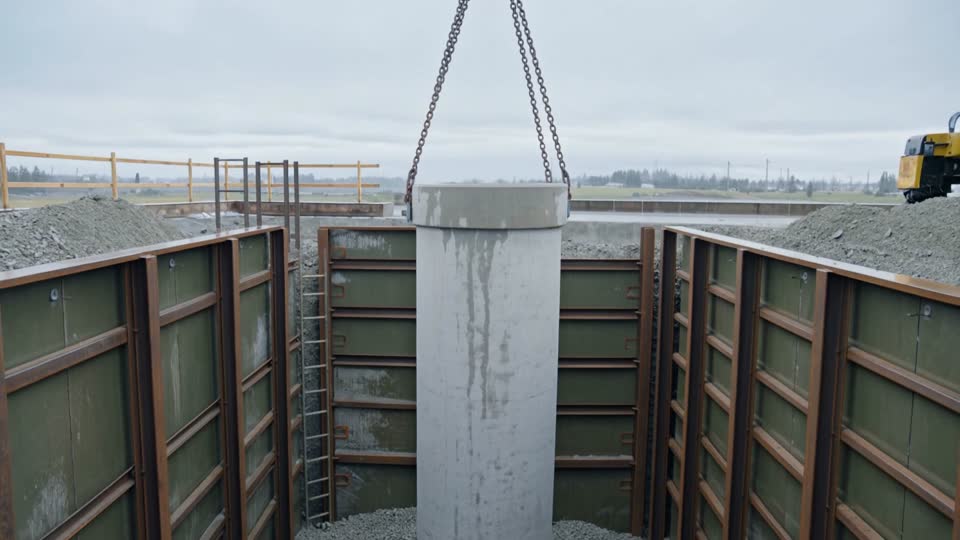
How deep you can dig without protection in every province, and the sloping, shoring and box rules.
G-402
Trench safety & shoring
How deep you can dig without protection in every province, and the sloping, shoring and box rules.
-
 G-403
Spring road bans
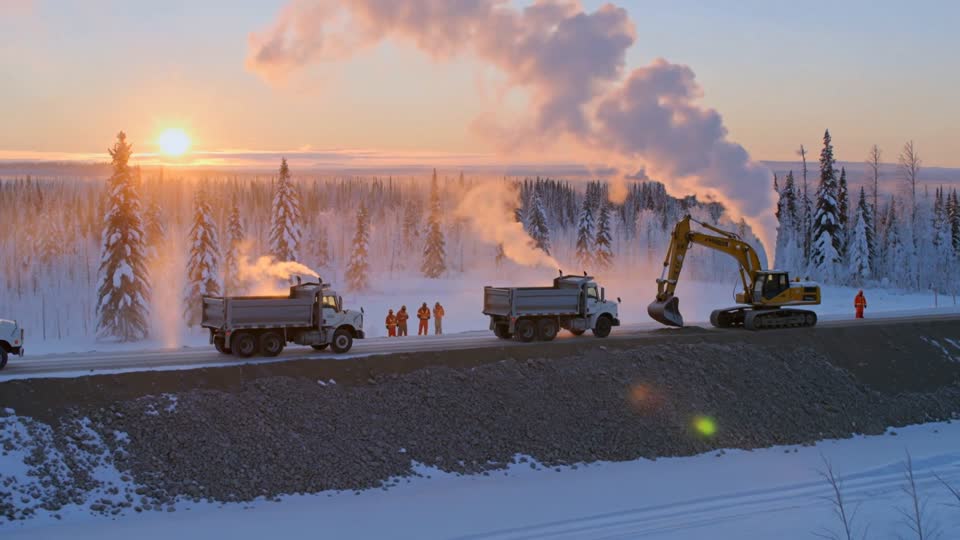
Why thaw closes roads to heavy loads, how Alberta, Saskatchewan, Manitoba and Ontario set them, and how to plan around them.
G-403
Spring road bans
Why thaw closes roads to heavy loads, how Alberta, Saskatchewan, Manitoba and Ontario set them, and how to plan around them.